







Key takeaways
- Invisalign moves teeth, which can gently reshape the support of your lips and cheeks, not the bones of your face.
- Deep bite correction can add length to a short-looking lower face and soften a strained profile.
- Aligners are worn 24 hours a day, removed only for oral hygiene, with most cases finishing in 6 to 12 months.
- Facial changes are usually modest and vary by age and starting bite.
- A consultation at Lawen Dentistry in Halifax is the way to see what is realistic for you.
Answer First: Can Invisalign Change Your Jawline and Cheekbones?
Yes, but not in the dramatic way social media might suggest. When your bite is corrected, the teeth beneath your lips and cheeks shift into a more harmonious arrangement, and the soft tissue that drapes over them follows. The result can be a slightly refreshed profile. What does not happen is the underlying jawbone physically reshaping itself.
At Lawen Dentistry in Halifax, Dr. Danny Lawen, D.D.S., is a Blue Diamond Invisalign Provider (‘Blue Diamond’ Invisalign provider is a status awarded by Align Technology to dental practices that treat a high volume of patients, typically over 300 patients a year).
The short answer for Halifax patients
Think of your face as a tent and your teeth as the poles. Move the poles and the fabric settles differently, even though the fabric itself has not been re-cut. Clear aligners reposition teeth over 6 to 12 months, and the visible payoff tends to be a smoother, more supported look around the mouth rather than a brand new bone structure. Guidance from established sources confirms that aligners change tooth position and, by extension, the soft tissue they support, without moving the actual jaw joint on their own.
What actually changes vs. what stays the same
Can shift
- Lip fullness and support
- How the lower face reads in profile
- Cheek contour where crowded teeth once pulled soft tissue inward
- Balance between upper and lower lip
Stays the same
- The bones of the jaw and cheek
- Your genetic face shape
- Height of the cheekbone itself
- The jaw joint position without additional treatment
How Bite Correction Influences Facial Structure
Your bite is the quiet architect of your lower face. When upper and lower teeth meet cleanly, the muscles and lips around them relax into a natural rest. When they clash, the surrounding tissue compensates, and that compensation is what people often read as a strained or unbalanced profile.
The link between your bite, jaw position, and profile
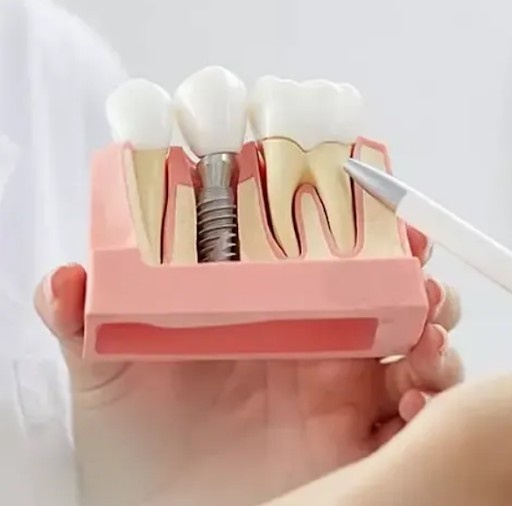
The teeth act as scaffolding for the lips. Flare them, retract them, or level them out, and the lips respond by sitting fuller, flatter, or more centered. This is why two people with identical bone structure can look quite different depending on how their teeth are positioned.
Deep bite, overbite, and open bite explained
Each pattern nudges the face in its own direction:
- Deep bite: the upper teeth cover too much of the lower, which can make the lower face look compressed or short.
- Overbite: upper front teeth sit far ahead of the lower front teeth, sometimes creating a receded-chin appearance.
- Open bite: front teeth do not touch when the back teeth meet, which can affect lip closure and rest posture.
The American Association guidance describes a deep bite as one in which the upper teeth significantly overlap the lower ones, a pattern that can wear teeth and strain the surrounding structures over time, per this resource.
Why teeth position affects lip and cheek support
Crowded or tipped teeth can pull the lips and cheeks inward, casting small shadows and hollows. Gently widening a narrow arch or leveling crowded teeth gives that soft tissue something firmer to rest against, which reads as fuller support.
What Happens to Your Jawline During Invisalign Treatment
Your jawline can look more defined once your bite is corrected, mostly because the lips and lower face settle into a cleaner line. The bone contour you were born with remains, but the frame around it changes.
Subtle changes to jaw alignment and profile
As teeth level and align, a lower face that once looked cramped may appear a touch longer and more relaxed. These shifts occur gradually over the 6 to 12-month treatment window, so most people notice them in comparison photos rather than day-to-day.
Why the jawbone itself does not move
Clear aligners work on teeth, not on the growth or shape of the mandible. Reports that Invisalign remodels the actual jawbone overstate what tooth movement can do.
Managing expectations about facial symmetry
If one side of your bite differs from the other, correction can improve balance, yet no treatment promises perfect symmetry. Faces are naturally a little uneven, and the goal is harmony rather than a mirror image.
Can Invisalign Affect Your Cheekbones?
Invisalign will not raise or reshape the cheekbone, but it can influence how full the mid-face appears. The difference lies in the soft tissue draped over the bone, not the bone itself.
How arch expansion can influence mid-face fullness
A narrow upper arch can leave the cheeks looking slightly sunken near the corners of the mouth. When aligners gently broaden that arch, the additional support can give the mid-face a subtly fuller appearance. It is a modest effect, best thought of as a smoothing rather than a lift.
The role of soft tissue and lip support
Lips and cheeks respond to whatever sits beneath them. Bring crowded teeth into a wider, more even curve and the tissue relaxes outward a fraction. This is the mechanism behind most before-and-after profile changes people report.
Deep Bite Correction and Facial Balance
Correcting a deep bite is one of the more noticeable ways aligners can influence the lower face, because it directly changes how much of the lower teeth show and how the lips close.
How correcting a deep bite can lengthen the lower face
When upper teeth heavily overlap the lower ones, the chin and lips can look bunched together. Leveling the bite by intruding front teeth and settling the back teeth can restore a bit of vertical height, giving the lower third of the face a more relaxed proportion.
Age differences in deep bite correction outcomes
Age matters. A prospective study comparing adolescents and adults found meaningful differences in how the lower front teeth respond during deep overbite correction, which helps explain why results vary from one patient to the next according to this research. Younger patients and adults can both benefit, but the path and the degree of change differ.
What the Evidence Says About Bite Correction and Facial Change
The honest summary is that aligners reliably move teeth and can affect soft-tissue support, while claims of major bone reshaping are not supported.
Research on open bite and deep bite correction
Clear aligners have measurable success in closing open bites, which improves lip closure and rest posture, both of which touch on facial appearance, as this study reports. Combined with the deep bite findings above, the picture is one of real but measured change centered on the teeth and the surrounding tissue.
Separating myths from real results
Trends like mewing promise dramatic jawline sculpting through tongue posture, but professional guidance cautions that such claims are not backed by sound evidence per this explainer. A corrected bite offers grounded, functional improvement, not viral transformation.
Is Invisalign Worth It to Correct Your Bite?
For most people, the answer leans yes, because a corrected bite pays off in comfort and long-term tooth health as much as appearance. The facial refinement is a welcome bonus rather than the headline.
Function and health benefits beyond appearance
- Even contact reduces uneven wear on enamel.
- Balanced teeth are easier to clean, reducing the risk of decay and gum disease.
- A settled bite can ease strain on the jaw muscles.
- Confident, unforced lip closure comes more naturally.
Consultation and scan
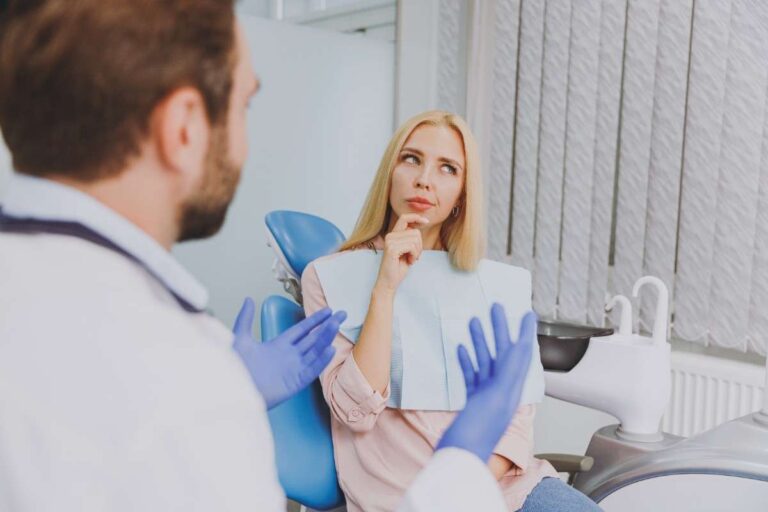
At Lawen Dentistry in Halifax, your bite and profile are assessed, and a digital scan captures your teeth.
Custom plan preview
A step-by-step map shows how teeth will move and what your finished bite should look like.
Wearing your aligners
Each set is worn 24 hours a day, removed only for oral hygiene, then swapped on schedule.
Progress checks
Short visits confirm teeth are tracking and answer any questions along the way.
Retention
Once the bite is settled, a retainer holds your new position so results last.
When to consult a Halifax dentist
If your bite feels off, your teeth show uneven wear, or you are curious how a straighter smile might refine your profile, a conversation is the sensible starting point. You can book a visit online or call 902-406-1888 to talk through what is realistic for your face and goals.
Have questions about your care? Book a consult with our team in Halifax.
Ready to take the next step?
Schedule a consultation with Lawen Dentistry – Mumford Road Clinic in Halifax.
Book online. Call 902-406-1888
Frequently asked questions
Q: Can Invisalign mess up the jawline?
Aligners move teeth and can gently shift the soft tissue that shapes your jawline, but they do not damage or misalign the jawbone itself. When treatment is planned carefully, the profile typically looks more balanced rather than worse.
Q: Does deep bite correction change your face?
It can. Correcting a deep bite may restore a little vertical height to a compressed lower face and relax how the lips close, which reads as a more proportioned lower third. The bone does not change, but the framing around it does.
Q: Can Invisalign change your cheekbones?
It will not reshape the cheekbone, but broadening a narrow arch and supporting the lips can make the mid-face appear subtly fuller. Any change comes from soft-tissue support rather than from the bone.
Q: Is Invisalign worth it to correct a bite?
For most people, the health benefits alone make it worthwhile, since a corrected bite reduces uneven wear, eases jaw strain, and makes cleaning easier. Any refinement to your profile is an added bonus. A consultation at Lawen Dentistry in Halifax can clarify what to expect.
For directions, use this helpful Google Maps link or get step-by-step navigation via Get Directions.
At Lawen Dentistry in Halifax, Dr. Danny Lawen, D.D.S., is a Blue Diamond Invisalign Provider (‘Blue Diamond’ Invisalign provider is a status awarded by Align Technology to dental practices that treat a high volume of patients, typically over 300 patients a year).
Remember: Invisalign shifts teeth and soft tissue, not bone – expect subtle refinement, not dramatic reshaping.
Disclaimer: For informational purposes only, not a substitute for professional advice. Consult Lawen Dentistry for guidance specific to you.